TL;DR – Key Takeaways
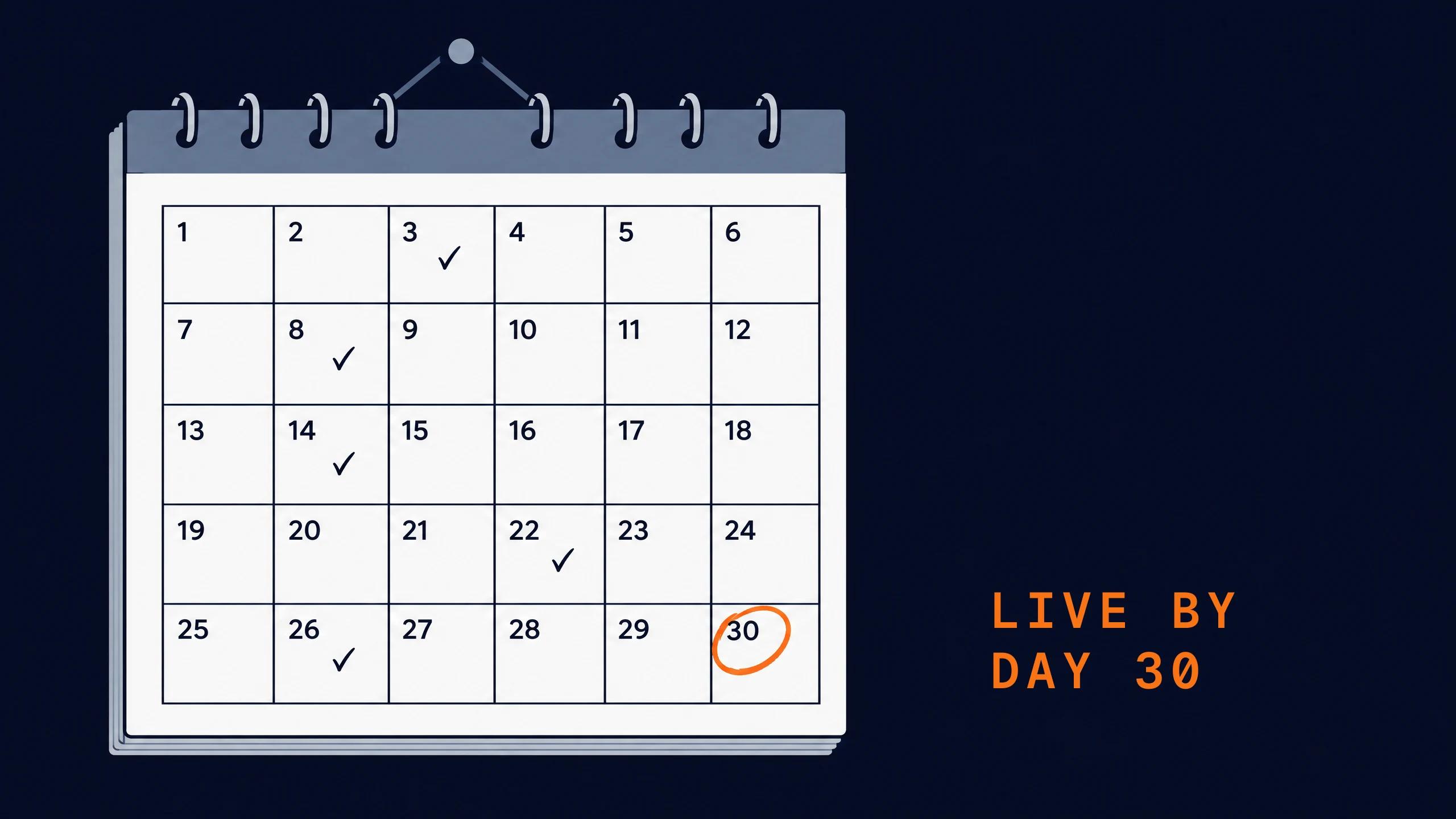
Master the fundamentals of content marketing and launch your first successful campaign in just 30 days with this strategic approach:
• Start with strategy, not content – Define SMART goals and deeply understand your audience before creating any content to avoid wasted resources and scattered efforts.
• Follow the proven 30-day framework – Week 1: Research and ideation, Week 2: Content creation, Week 3: Publishing and promotion, Week 4: Engagement and optimization.
• Match content formats to audience preferences – Use blogs for authority building, videos for tutorials (54% of audiences prefer video), and email for direct communication with 3600% ROI.
• Consistency beats volume every time – Publishing reliably 3 times weekly outperforms sporadic high-volume posting and builds stronger audience relationships.
• Measure what matters, not vanity metrics – Track metrics aligned with your goals using free tools like Google Analytics, focusing on conversions and ROI rather than just traffic numbers.
Content marketing generates 3x more leads than outbound marketing while costing 62% less. With 73% of marketers now using content marketing strategically, following this structured approach ensures you join the ranks of successful content marketers who drive real business results through authentic, valuable content creation.
Here’s a stat that stopped me in my tracks: 62% of B2B buyers will read at least 3-7 pieces of content before they’ll even consider talking to a salesperson.
Think about that for a second. Your prospects are actively seeking out content—they want to learn from you before they buy from you. Content marketing isn’t some nice-to-have marketing tactic anymore. It’s how modern buyers actually behave.
And businesses are catching on. Some 73% of B2B marketers and 70% of B2C marketers have made content marketing part of their strategy, which makes sense when you look at the numbers. Content marketing generates over three times more leads than outbound marketing while costing 62% less on average.
(Those are the kind of numbers that make CFOs very happy.)
But here’s where it gets tricky. Despite all these impressive stats, most businesses still struggle with the basics. Maybe you’re one of those marketing professionals juggling five different responsibilities (you’re not alone—over 20% of marketers wear multiple hats). Or perhaps you’re a business owner who knows you need content marketing but has no idea where to start.
The thought of launching a content marketing campaign can feel overwhelming. I get it.
But here’s what I’ve learned: you don’t need months of planning and massive budgets to get started. You can go from zero to a working content marketing campaign in 30 days. Not a perfect campaign, mind you, but one that actually works and drives results.
This guide will walk you through the entire process—from figuring out your strategy to measuring what’s working. We’ll cover the fundamentals of creating content that your audience actually wants to read, watch, or share. Most successful marketers use content marketing to create brand awareness, build credibility, educate their audience, and generate leads. You can do the same.
Sound good? Let’s get started.
Start with a Clear Strategy
I see it all the time: businesses that dive headfirst into creating blog posts, videos, and social media content without any real plan behind it. They publish consistently for months, wonder why nothing’s working, then conclude that content marketing “doesn’t work for their industry.”
The problem isn’t content marketing. The problem is they skipped the most important step: strategy.
Look, I understand the temptation to start creating right away. Strategy feels abstract and time-consuming when you could be writing that blog post or filming that video. But here’s what I’ve learned: a week spent on strategy can save you months of creating content that nobody cares about.
Why strategy matters before content creation
Your content marketing strategy is your “why”—why you’re creating content, who you’re helping, and how you’ll help them in a way no one else can. Without it, you’re essentially throwing content at the wall and hoping something sticks.
Organizations that get content marketing right typically use it to achieve one of three business outcomes: increased revenue, lower costs, or better customers. Notice I didn’t say “increased brand awareness” or “more social media followers.” Those might be nice byproducts, but they’re not business outcomes.
Research backs this up. Marketers with documented strategies are far more likely to consider themselves effective and feel significantly less challenged with every aspect of the process. Meanwhile, those without a strategy often describe their content marketing efforts as scattered and ineffective.
A solid strategy gives you five things:
- Team alignment on specific goals and objectives
- Clear direction for both content creation and distribution
- Better resource allocation (your time, budget, and talent)
- Improved search visibility
- Stronger brand authority and trust
Set SMART goals for your campaign
Here’s where most people go wrong with goal-setting: they create vague objectives like “increase brand awareness” or “get more engagement.” These aren’t goals—they’re wishes.
SMART goals work because they force you to be specific. Your objectives need to be Specific, Measurable, Actionable, Relevant, and Time-bound. More importantly, they need to use language that your boss (or your CFO) actually cares about.
Skip the marketing jargon. Use sales language instead—words like generate, grow, drive, and retain. These concrete terms connect directly to what executives want to hear about.
For your first 30-day campaign, try goals like these:
- Increase leads by 5% month-over-month
- Reach 20,000 website visitors via organic search by month’s end
- Boost email open rates from 25% to 40% in one quarter
Start with your business’s bigger picture. Are you focused on customer acquisition? Conversion? Retention? Once you know that, you can figure out how your content marketing supports those broader objectives.
Identify your audience and their needs
This might sound obvious, but you’d be surprised how many businesses create content without really knowing who they’re talking to. They have a general sense of their audience, but they haven’t done the work to understand what actually matters to these people.
Getting your target audience right isn’t just good marketing practice—it can boost your sales by up to 20%. And with 68% of consumers expecting personalized experiences, generic content just doesn’t cut it anymore.
You need to dig deeper than basic demographics. Sure, knowing that your audience is “marketing managers aged 30-45” is helpful, but it’s not enough. You need to understand their pain points, their daily challenges, what keeps them up at night, and what success looks like in their role.
Start with the data you already have. Look at your existing customer information, conduct social listening, and do some keyword research to see what your audience is actually searching for. This isn’t about constraining your efforts—it’s about focusing them on people who are most likely to respond to what you’re offering.
Once you know who you’re talking to, identify their need states. Are they driven by emotion (fear, desire)? Social pressures (FOMO, status)? Or logical considerations (financial gain, efficiency)? Understanding these motivations helps you create content that actually resonates and guides people through their buying journey.
Choose the Right Content Types and Channels
You’ve got your strategy nailed down and you know who you’re talking to. Now comes the fun part: deciding what to create and where to put it.
Here’s the reality check: no single content format works for everyone. Your job is to find the right mix that matches how your audience likes to consume information.
Overview of content formats: blogs, video, social, email
Think of content formats like tools in a toolbox. Each one serves a specific purpose, and the best content marketers know when to use which tool.
Blogs are still the workhorse of content marketing. They help you build authority, earn backlinks from other sites, and create a library of content that keeps working for you months or years later. Plus, search engines love fresh, quality blog content.
Video is where audience demand is heading. Some 54% of audiences want to see videos from brands they support—more than any other content type. Video works especially well for explaining complex concepts or showing products in action.
Beyond these two core formats, you’ve got options:
- Podcasts – 62% of U.S. consumers listen to podcasts, and it’s a format that lets you build deeper relationships with your audience
- Email newsletters – Still the highest ROI channel at 3600% return, and you own the relationship
- Infographics – Perfect for making complex data digestible and shareable
- Social media posts – Essential for community building, with 94% of content marketers using social as a distribution channel
How to match content types to your audience
Here’s how I approach content format selection: start with your audience’s preferences, then consider your message.
If you’re teaching people how to do something, video tutorials are your best bet. Research shows 91% of people have watched explainer videos to learn about products or services. But if your audience consists of busy executives who consume content on the go, a well-structured email newsletter or podcast might work better.
Demographics matter too. Age, learning styles, and personal preferences all influence format choices. A younger audience might gravitate toward short-form video content, while professionals might prefer in-depth LinkedIn articles or whitepapers.
The nature of your information also guides format selection. Complex data? Infographics make it digestible. Nuanced discussions? Podcasts allow for deeper exploration. Product demonstrations? Video drives results—86% of video marketers report increased website traffic.
Selecting the best platforms for distribution
Content distribution breaks down into three categories: owned, earned, and paid.
Owned channels—your website, blog, email list—give you complete control. These form your foundation because you’re not at the mercy of algorithm changes or platform policies.
Earned channels happen when others share your content—social shares, mentions, press coverage. Sometimes this creates unexpected wins. Ocean Spray didn’t create that viral TikTok video, but they were smart enough to capitalize on it when it took off.
Paid channels include social media ads, native advertising, and content syndication. These let you reach new audiences with precision targeting based on demographics, location, and interests.
The key is going where your audience already hangs out. Don’t try to be everywhere—focus on the platforms where your people spend time. Build a sustainable mix that you can actually maintain.
Build a 30-Day Execution Plan
You’ve got your strategy nailed down and you know what content formats work for your audience. Now comes the part that separates successful content marketers from those who just talk about it: actually executing.
Let me walk you through a 30-day plan that takes the guesswork out of your first campaign. This isn’t just theory—it’s a framework I’ve seen work for businesses ranging from solo consultants to mid-sized companies.
Week 1: Research and ideation
Your first week is all about laying the groundwork. I know it’s tempting to jump straight into creating content, but trust me on this—the research you do now will save you hours of frustration later.
Content ideation isn’t about sitting in a room brainstorming random topics. It’s about understanding what your audience is actually looking for. Start with keyword research using tools like Semrush or Ahrefs to see what your potential customers are searching for. This data-driven approach means you’re creating content people actually want to find.
Here’s what I recommend: map out your content into categories that match your audience’s needs. Let’s say you run a Pilates studio. Your categories might include Pilates techniques, meditation tips, nutrition advice, and cross-training ideas. Each category addresses a different pain point your customers have.
This organization system will become your content backbone for months to come.
Week 2: Content creation and editing
Time to roll up your sleeves. This week is about turning your research into actual content that people will want to read, watch, or share.
If you’re writing blog posts or articles, start with a template instead of staring at a blank page. Even if you’re a one-person operation, having a consistent process keeps your quality high and your momentum going.
One thing I can’t stress enough: fact-check everything. Verify your research is current and update any outdated information before you publish. Your credibility depends on it.
Here’s something worth noting: companies that publish 16+ blog posts monthly generate 4.5 times more leads than those publishing 0-4 posts. But don’t let that pressure you into churning out mediocre content. Quality still beats quantity every time.
Week 3: Publishing and promotion
Your content is ready. Now what? This is where many businesses stumble—they publish and hope for the best.
Start with the basics: optimize your content for search engines by including target keywords in headlines, title tags, and meta descriptions. Then implement what I call a “distribution strategy”—use your owned channels (website, email list), chase earned media (social shares, mentions), and consider some paid promotion if your budget allows.
Remember: hitting publish is just the starting point. The magic happens when you actively promote what you’ve created.
One smart move? Repurpose your content across multiple platforms. That single blog post can become a social media series, an email newsletter topic, and a podcast episode. You’re maximizing your return on the time you invested in creating it.
Week 4: Engagement and optimization
Your final week is about learning from what you’ve done. Track metrics that actually matter—engagement rates, conversion rates, and how long people stay on your content.
Use your analytics tools to identify which topics resonated most with your audience. This data becomes the foundation for planning your next 30-day cycle.
Here’s a simple habit that will serve you well: spend 15 minutes every Monday morning reviewing your metrics against your goals. Look for patterns—what worked, what didn’t, and what opportunities you might have missed. This regular check-in ensures you’re always improving, not just creating more content.
The goal isn’t perfection in your first 30 days. It’s building a system that gets better with each cycle.
Launch and Promote Your Campaign
Your content creation journey doesn’t end when you hit publish. Actually, that’s just the beginning.
How you launch and promote your campaign often determines whether it succeeds or gets buried in the internet graveyard. Let me show you what actually works.
How to schedule and publish content
Timing isn’t everything, but it’s not nothing either.
Research shows Tuesdays through Thursdays between 9 a.m. and 2 p.m. typically yield the highest engagement across platforms. Each social network has its own sweet spots:
- Facebook: Weekdays 10 a.m. to 2 p.m.
- Instagram: Tuesdays and Wednesdays between 10 a.m. and noon
- LinkedIn: Tuesdays and Wednesdays until 4 p.m.
- TikTok: Tuesdays through Fridays, 4-6 p.m.
But here’s what matters more than perfect timing: consistency. Posting reliably three times a week beats sporadic high-volume posting every time. Your audience needs to know when to expect you.
Tools like Buffer, Hootsuite, and native platform schedulers can help you maintain that consistency without living chained to your phone. Use them.
Using social media and email to drive traffic
Email remains your most direct line to people who actually care about what you have to say. Unlike social media algorithms that decide whether your content gets seen, email delivers your content straight to subscribers who chose to hear from you.
The numbers don’t lie: email marketing yields approximately $36-$40 for every $1 spent. That’s hard to ignore.
For social promotion, match your content to what works on each platform. Videos and infographics consistently outperform text-only posts. Don’t fight the platforms—work with them.
Encouraging engagement and shares
Want people to share your content? Give them a reason.
The brand content traits that social media users value most are authenticity and relatability. People share content that makes them look smart, helpful, or part of something bigger than themselves.
Here’s what actually drives engagement:
- Clear calls-to-action – Don’t make people guess what you want them to do
- User-generated content – 26% of consumers say it’s the most engaging content in their feeds
- Interactive elements – Polls and question-based posts spark conversations better than statements
Stop hoping for viral content and start creating content worth sharing.
Measure Success and Plan Next Steps
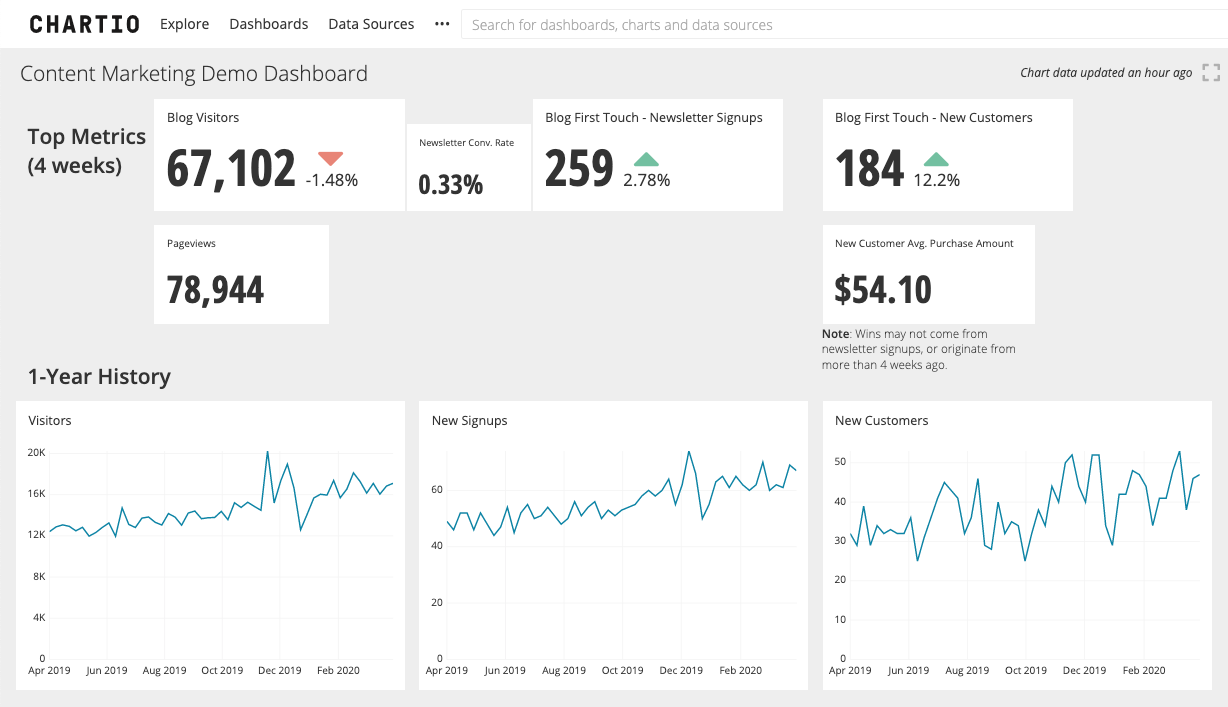
Image Source: Chartio
You’ve got your campaign live. Content is being published. People are (hopefully) reading it.
Now comes the part that separates successful content marketers from those who just throw stuff at the wall and hope it sticks: measuring what’s actually working.
Here’s a reality check: only 66% of marketers analyze their content performance regularly. That means one-third of content marketers are essentially flying blind, missing out on insights that could make their next campaign significantly more effective.
Don’t be one of them.
Track performance using free analytics tools
You don’t need expensive analytics platforms to measure your content’s impact. Google Analytics remains the gold standard for most marketers, giving you everything you need to understand traffic sources, user behavior, and conversion paths. If you’re concerned about privacy, Matomo and PiwikPro work just as well.
I recommend setting up a simple 15-minute daily routine to stay on top of your performance:
- Monday: Check which traffic sources send buyers versus browsers
- Tuesday: Identify which content keeps people reading
- Wednesday: Examine conversion paths for unnecessary steps
- Thursday: Test small changes to headlines or calls-to-action
- Friday: Document what worked
Fifteen minutes a day. That’s it. This small time investment can dramatically improve your campaign performance over time.
Evaluate what worked and what didn’t
When you’re looking at your data, resist the temptation to get excited about vanity metrics like page views or social shares. The two biggest challenges for marketers are attributing ROI to content efforts (56%) and tracking customer journeys (56%).
Focus on metrics that actually matter for your business goals. If you’re trying to drive more traffic, measure organic traffic and search rankings. If you want leads, track form completions and email signups.
Pull regular reports so you can spot trends over time rather than getting caught up in day-to-day fluctuations. What you’re looking for are patterns—which topics consistently perform well, which distribution channels bring the most engaged visitors, which content formats your audience prefers.
Plan your next 30-day cycle
Content marketing works in cycles. Your first 30-day campaign is just the beginning. Use what you learned from your analytics to plan your next cycle.
Double down on what worked. If video content got twice the engagement of blog posts, make more videos. If LinkedIn drove better quality leads than Twitter, shift more effort to LinkedIn. If certain topics consistently performed well, create more content around those themes.
And don’t be afraid to cut what isn’t working. If a particular content format consistently underperformed, drop it and try something else.
This systematic approach to improvement is what makes content marketing so effective over time. Each cycle gets better because you’re building on real data rather than assumptions.
Need help determining if your content strategy is on the right track? Get AI-readiness audit to identify opportunities you might be missing.
Conclusion
That’s the 30-day content marketing framework. Not rocket science, but it works.
Look, content marketing isn’t going to solve all your business problems overnight. It’s not some magic bullet that turns struggling businesses into overnight successes. But what it will do is give you a reliable way to attract, educate, and convert prospects who are already looking for what you offer.
The framework we’ve covered—strategy first, then content types and channels, followed by a structured 30-day execution plan—strips away the complexity that stops most businesses from getting started. You don’t need a team of 20 people or a six-figure budget. You just need to start.
Here’s what I’ve learned from working with dozens of businesses on their content marketing: the ones that succeed are the ones that start simple and stay consistent. They pick a few content formats that make sense for their audience. They publish regularly, even if it’s just once a week. And they actually measure what’s working instead of just hoping for the best.
The data backs this up. Companies that stick with content marketing see results—three times more leads at 62% lower cost than traditional marketing. But those results come from persistence, not perfection.
Your first 30 days won’t be flawless. Your first blog post might get three readers (all from your mom’s Facebook shares). Your first video might have terrible audio. That’s fine. What matters is that you start building the habit of creating valuable content for people who need your help.
After 30 days, you’ll have something most businesses don’t: actual data about what your audience responds to. Use that data to plan your next 30 days. Then do it again. That’s how content marketing actually works—not through one perfect campaign, but through consistent effort that gets better over time.
Ready to get started? Pick your first piece of content and start this week.
What are the key components of a successful content marketing strategy?
A successful content marketing strategy includes setting clear goals, understanding your target audience, choosing the right content formats and distribution channels, and consistently measuring and optimizing your efforts. Start with a well-defined strategy before creating content to avoid wasted resources and scattered efforts.
How long does it take to see results from content marketing?
While results can vary, you can launch your first content marketing campaign in as little as 30 days by following a structured approach. This includes one week each for research and ideation, content creation, publishing and promotion, and engagement and optimization. However, consistent effort over time is key to seeing significant long-term results.
Which content formats are most effective for engaging audiences?
The effectiveness of content formats depends on your audience preferences and business goals. Blogs are great for building authority, while 54% of audiences prefer video content for tutorials and explanations. Email marketing remains highly effective with an average ROI of 3600%. The key is to use a mix of formats that resonate with your specific target audience.
How often should I publish content?
Consistency is more important than volume when it comes to content publishing. Posting reliably three times a week is generally more effective than sporadic high-volume posting. This approach helps build stronger audience relationships and maintains a steady flow of engagement.
What metrics should I track to measure content marketing success?
Focus on metrics that align with your specific goals rather than vanity metrics. For traffic goals, measure organic traffic and search rankings. For lead generation, track form completions and email signups. Use free tools like Google Analytics to monitor these metrics and make data-driven decisions to continuously improve your content strategy.